
Create a Wallet
Understand addresses, seed phrases, private keys and networks before creating a wallet on a trusted device.
Open guide →imtoken
Understand multi-chain assets, network selection, sending and receiving, DApp connections, signatures, approvals, network concepts and wallet security in one clear workflow. Each action should be based on information you can verify.
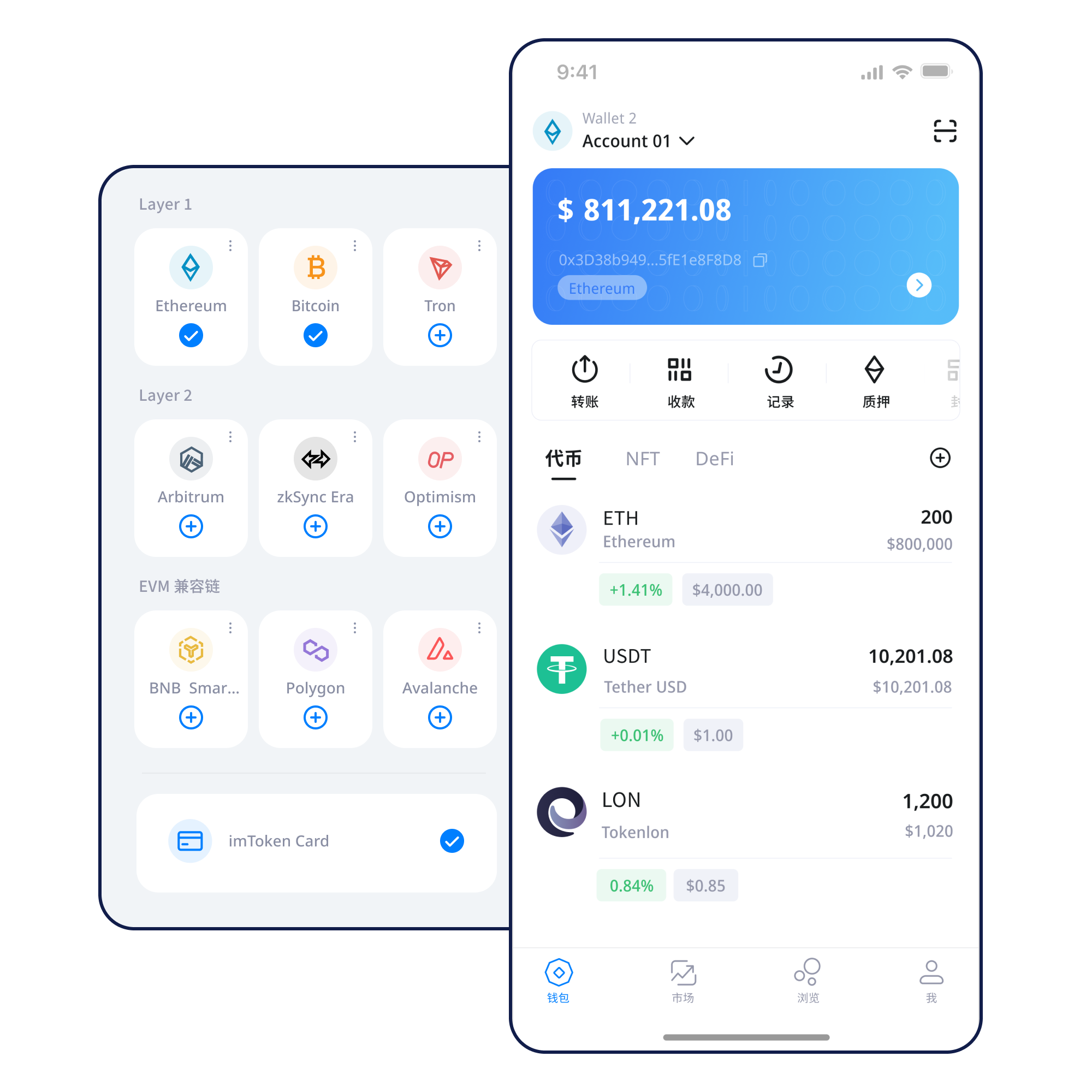
Quick tasks
Common actions are separated into clear paths with the checks that matter at each step.
Understand addresses, seed phrases, private keys and networks before creating a wallet on a trusted device.
Open guide →Keep the seed phrase complete, ordered and offline; do not share it through chats, screenshots or plaintext cloud storage.
Open guide →Confirm the target network and asset type before sharing an address; a small test can reduce uncertainty.
Open guide →Review the recipient, network, amount and gas, then read the transaction again before signing.
Open guide →A connection is only a session; signatures, approvals and transactions still require separate review.
Open guide →Wallet capabilities
Multi-chain management works best when each network’s assets, addresses, fees and confirmations stay clearly separated.
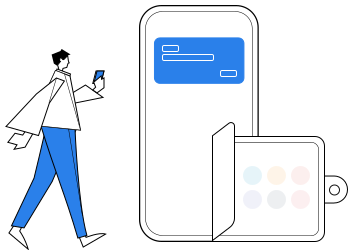
View assets, manage networks, review history and inspect each DApp request on mobile.
Verify the recipient, network, amount, gas and transaction hash before and after sending.
Understand browser connections, approvals and session cleanup without treating a connection as consent to later requests.
Seed phrases and private keys remain under user control; signatures and approvals should be reviewed by target, network and scope.
Network explorer
Each network has separate state. When switching, verify the network name, native gas asset, destination address and matching explorer.
Learn more →Public chains record transactions through nodes, blocks and consensus. Transaction hashes and confirmations provide an independent view of results.
Learn more →
EVM networks often share address formats, while assets, gas, token contracts and approvals remain network-specific.
Learn more →
Layer 2 systems relate to mainnet through settlement or data mechanisms. Cross-layer transfers can involve bridges, confirmations and waiting.
Learn more →
Gas reflects network resource use, while confirmations show block inclusion. Pending and failed transactions require different checks.
Learn more →Usage path
Use the dedicated download entry instead of unknown links.
Use a trusted device and confirm the resulting address.
Keep the seed phrase offline and never disclose private keys or verification codes.
Verify the network name, address and gas asset to avoid wrong-network actions.
Verify recipient, network and amount; use a small test when appropriate.
Keep transaction hashes, inspect DApp signatures and review old approvals regularly.
Web3 & DApp
Connecting a wallet does not mean every signature should be accepted. Review each signature and approval independently, including the domain, network and target contract.
Security
Wallet security is an ongoing set of habits rather than a one-time setting. Seed phrases and private keys remain under user control and should never be sent to anyone. Review the address, network and amount before transferring; on-chain transactions often cannot be reversed by a wallet alone. When using third-party DApps or smart contracts, inspect signature content, approval targets and permission scope, and remove permissions you no longer need. Shared devices, public networks and remote-control environments require extra care.
Academy
Start with addresses, seed phrases, private keys, networks, gas, transaction hashes, DApps and approvals before creating a wallet or moving assets. This makes unfamiliar requests easier to evaluate.
Read the starter guide →Ethereum & PoS
Understand Ethereum PoS, validators, reward sources, network state, withdrawals and exits. Rewards can vary and exits can involve waiting periods.
Read staking basics →Consider protocol penalties, validator status, smart-contract risk, waiting periods, asset-price volatility and third-party risk. Staking does not guarantee returns.
Learn about validators →Updates
Use on-site explanations to understand changes without invented dates, partnerships, rankings or user metrics.
Use on-site explanations to understand changes without invented dates, partnerships, rankings or user metrics.
Use on-site explanations to understand changes without invented dates, partnerships, rankings or user metrics.
Use on-site explanations to understand changes without invented dates, partnerships, rankings or user metrics.
Use on-site explanations to understand changes without invented dates, partnerships, rankings or user metrics.
FAQ
A wallet manages keys and account information. An address is a public on-chain identifier that can receive assets. An address may be shared; a seed phrase or private key should not be.
It is safer not to. Screenshots can sync to cloud storage or be read by other software. Prefer an offline backup that you can protect physically.
You should not rely on any service to restore a private key. Seed phrases and private keys remain under the user’s control; requests to reveal them should be treated as high risk.
Networks maintain separate state and fee systems. The same-looking address can exist on multiple networks while holding entirely different assets and histories.
Gas is the network-fee concept used to pay for computation or transaction inclusion. It is usually paid in the network’s native asset and can change with network demand.
A transaction hash is a traceable identifier that can be used in the matching network’s block explorer to review status, block inclusion, sender, recipient and fees.
Check network conditions, fee settings, nonce and the existing transaction before submitting anything again. Repeated submissions without understanding the cause can create confusion or extra cost.
All download actions use the dedicated download page. Review the network, address and security context before acting.